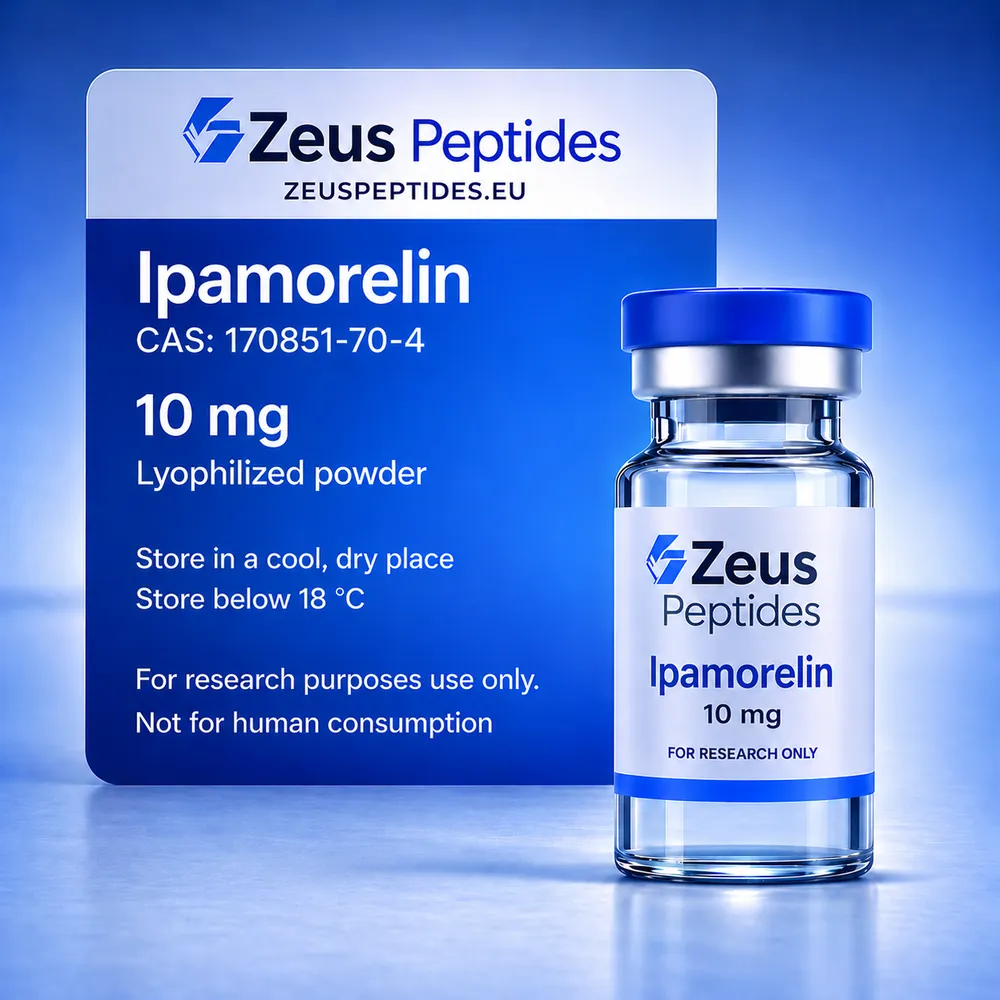
Ipamorelin is a synthetic pentapeptide classified in the scientific literature as a growth hormone secretagogue (GHS): a molecule that acts on the ghrelin receptor and thereby influences the release of growth hormone by the pituitary gland. Ipamorelin is often mentioned alongside CJC-1295, but it also deserves a detailed discussion on its own. This article covers what Ipamorelin is, how it compares to other growth hormone secretagogues, and which research areas scientists study.
What is Ipamorelin?
Ipamorelin is a synthetic pentapeptide (five amino acids) belonging to the class of growth hormone-releasing peptides (GHRPs). The molecule was developed as one of the more selective members within this class, aiming to avoid the broader, less specific effects of earlier generations of GHRPs.
In the literature, Ipamorelin is described as a ghrelin receptor agonist: it binds to the same receptor targeted by the natural hormone ghrelin, which regulates the release of growth hormone by the anterior pituitary via this receptor.
Why Ipamorelin is considered more selective than other GHS peptides
An important characteristic highlighted in comparative publications on growth hormone secretagogues is the relative receptor selectivity of Ipamorelin. Whereas older generations of GHRPs (such as GHRP-6) also show effects on other signaling pathways in cell culture models — for example, pathways related to cortisol and prolactin release — the literature describes Ipamorelin as a molecule with a more limited, more targeted effect within this broader signaling context.
This relative selectivity makes Ipamorelin a relevant subject of study for researchers specifically wanting to isolate the ghrelin receptor pathway, without the broader signaling observed in cell models with less selective analogs.
Research areas around Ipamorelin
Receptor pharmacology research in vitro
A significant part of the published literature on Ipamorelin concerns in-vitro research into ghrelin receptor binding and the subsequent intracellular signal transduction in cell culture models.
Endocrinological research on growth hormone release
Ipamorelin is studied within broader endocrinological research lines on the regulation of growth hormone release via the pituitary, often in combination with, or in comparison to, GHRH analogs as discussed in our article on CJC-1295 and Ipamorelin.
Comparative research between GHS generations
Because Ipamorelin belongs to a later generation of growth hormone secretagogues, it is regularly used in comparative research examining the receptor selectivity and signaling profiles of different GHRPs side by side.
Ipamorelin versus other growth hormone secretagogues
In comparative publications, Ipamorelin is generally distinguished from other widely studied GHS peptides on the following points:
- Compared to GHRP-6: Ipamorelin is described as more selective, with less observed activity on signaling pathways outside the primary ghrelin receptor pathway in cell models.
- Compared to Hexarelin: Hexarelin is described in the literature as more potent but less selective; Ipamorelin is regarded as the milder, more targeted alternative within the same peptide class.
- Compared to GHRH analogs (such as CJC-1295 or Tesamorelin): these act on a different receptor (the GHRH receptor rather than the ghrelin receptor), forming the basis for research into combined effects of both receptor pathways on growth hormone release.
How scientists study Ipamorelin
- In-vitro cell culture models: research into ghrelin receptor binding and signal transduction at the molecular level.
- In-vivo animal models: preclinical studies in laboratory animals at recognized research institutions, focused on endocrine parameters according to ethically reviewed protocols.
- Comparative pharmacological research: studies examining Ipamorelin alongside other GHS peptides and GHRH analogs to understand receptor profiles and signaling dynamics.
Limitations of the current body of research
Researchers publishing on growth hormone secretagogues point to a number of recurring limitations:
- Much available data comes from in-vitro models or small-scale animal models, which limits generalizability.
- Differences in experimental protocols between studies complicate direct comparison.
- The precise long-term dynamics of repeated receptor activation within research models remains the subject of ongoing study.
Frequently asked questions
What is the difference between Ipamorelin and CJC-1295?
Ipamorelin is a ghrelin receptor agonist (GHS), while CJC-1295 is a GHRH analog that acts on a different receptor. They are often studied together because both pathways ultimately contribute to the regulation of growth hormone release, but through different mechanisms. See our separate article on CJC-1295 and Ipamorelin for a detailed comparison.
Why is Ipamorelin called "selective"?
Because in cell culture research it shows a more limited signaling profile than older GHRPs such as GHRP-6, with less observed activity on pathways outside the primary ghrelin receptor.
Is Ipamorelin approved for use in humans?
No. Ipamorelin has no marketing authorization as a medicine in the EU. ZeusPeptides offers this peptide exclusively as a research chemical for qualified laboratories.
Sources/References
- Receptor pharmacology publications on ghrelin receptor agonists and growth hormone secretagogues.
- Comparative studies between generations of GHRPs in peer-reviewed endocrinology journals.
Interested in Ipamorelin for your laboratory research? View Ipamorelin in our range at ZeusPeptides.