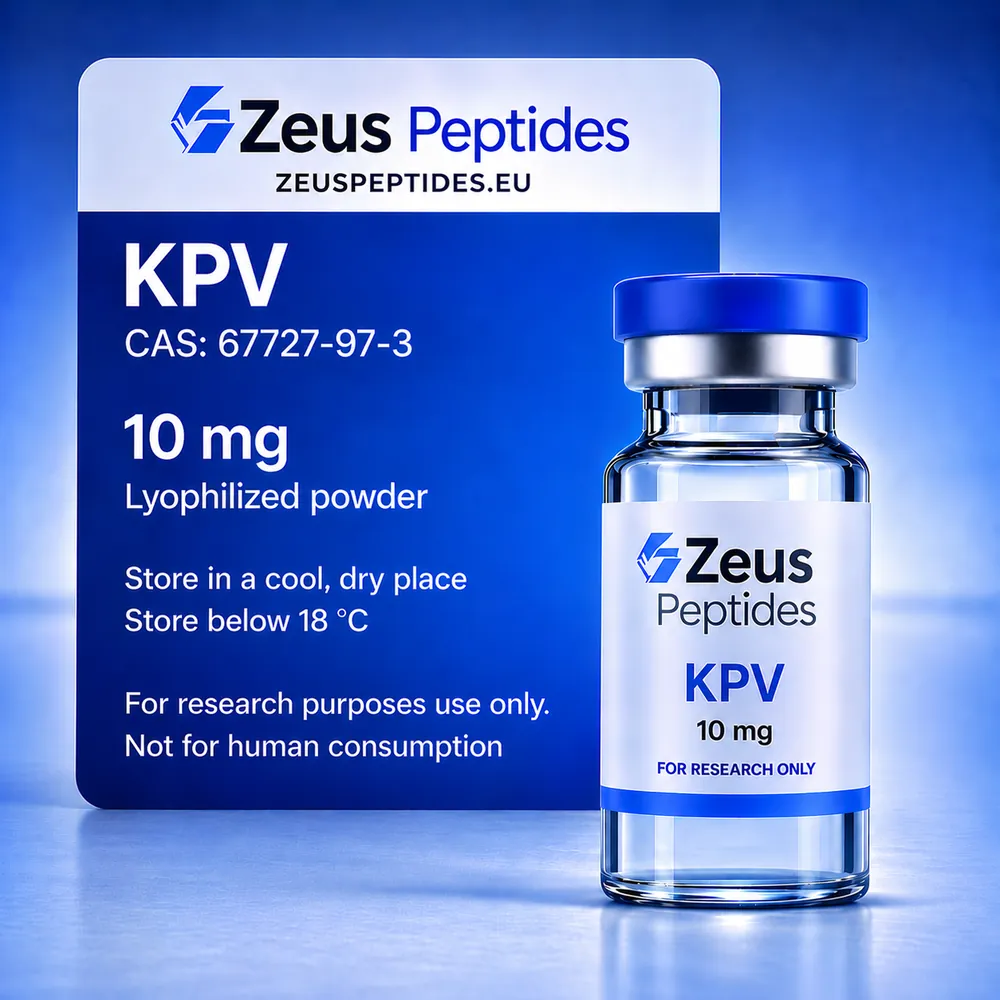
KPV is a small tripeptide that appears regularly in the scientific literature on inflammatory biology at the cellular level. Its name is derived from the three amino acids that make up the molecule: lysine (K), proline (P), and valine (V). This article discusses what KPV is, where it comes from, and which research areas scientists study this peptide within.
What is KPV?
KPV is the C-terminal tripeptide fragment of alpha-melanocyte-stimulating hormone (alpha-MSH), a larger, naturally occurring peptide hormone. Researchers have found that this short fragment, despite its limited length of only three amino acids, exhibits certain biological activity in cell culture models that is independent of the melanocortin receptors targeted by the full alpha-MSH molecule.
This finding makes KPV scientifically interesting: it suggests that small peptide fragments can sometimes retain independent activity, separate from the larger molecule they are derived from — a theme with broader relevance within peptide chemistry.
Structural origin: a fragment of alpha-MSH
Alpha-MSH is a peptide hormone that naturally plays a role in several physiological signaling pathways, including pigment regulation. Through structure-activity research, scientists have found that the short C-terminal fragment (KPV) appears to retain certain cell-biological properties of the full hormone, while not appearing to act through the classical melanocortin receptors the way the full molecule does. This makes KPV a relevant subject of study within research on structure-function relationships of peptide fragments.
Research areas around KPV
Cellular inflammation research in vitro
The majority of the published literature on KPV concerns in-vitro research into cell signaling pathways involved in inflammatory processes at the molecular level. Researchers study, in cell culture models, how KPV interacts with signaling proteins involved in inflammatory cascades, such as NF-κB-related pathways.
Intestinal and skin tissue models in animals
KPV also appears in preclinical research in rodents, where scientists examine effects at the tissue level in models of intestinal and skin tissue. This research takes place within strictly regulated, ethically reviewed animal models and is aimed at better understanding underlying inflammatory mechanisms — not at applications in humans.
Structure-activity research on peptide fragments
Because KPV is a fragment of a larger hormone, it is also used in comparative research examining which parts of larger peptides are responsible for specific cell-biological effects — a question relevant to peptide chemistry more broadly.
How scientists study KPV
- In-vitro cell culture models: experiments measuring signal transduction pathways within inflammatory cascades at the molecular level.
- In-vivo animal models: preclinical studies in laboratory animals at recognized research institutions, focused on tissue responses according to ethically reviewed protocols.
- Comparative structural research: analyses comparing KPV to the full alpha-MSH molecule and to other peptide fragments to understand structure-function relationships.
Limitations of the current body of research
Researchers publishing on KPV typically point to a number of limitations characteristic of this relatively specialized research field:
- Many studies are limited to in-vitro models or small-scale animal models, which constrains the generalizability of findings.
- The precise molecular mechanism by which KPV produces cell-biological effects without engaging the classical melanocortin receptors has not yet been fully elucidated.
- Independent replication of findings by multiple research groups remains limited in the published literature.
Frequently asked questions
Is KPV the same as alpha-MSH?
No. KPV is a small fragment (tripeptide) derived from the larger alpha-MSH molecule, but the literature describes it as functionally distinct: it does not appear to act through the same melanocortin receptors as the full hormone.
Why is a tripeptide of only three amino acids interesting for research?
Because, despite its short length, it exhibits biological activity in cell culture models. This is scientifically relevant to the broader question of which minimal peptide structures can still be functionally active.
Is KPV approved for use in humans?
No. KPV has no marketing authorization as a medicine or supplement in the EU. ZeusPeptides offers this peptide exclusively as a research chemical for qualified laboratories.
Sources/References
- Publications on alpha-MSH fragments and tripeptide activity in cell biology journals.
- Preclinical research on inflammatory signaling pathways in animal models, published in peer-reviewed literature.
Interested in KPV for your laboratory research? View KPV in our range at ZeusPeptides.