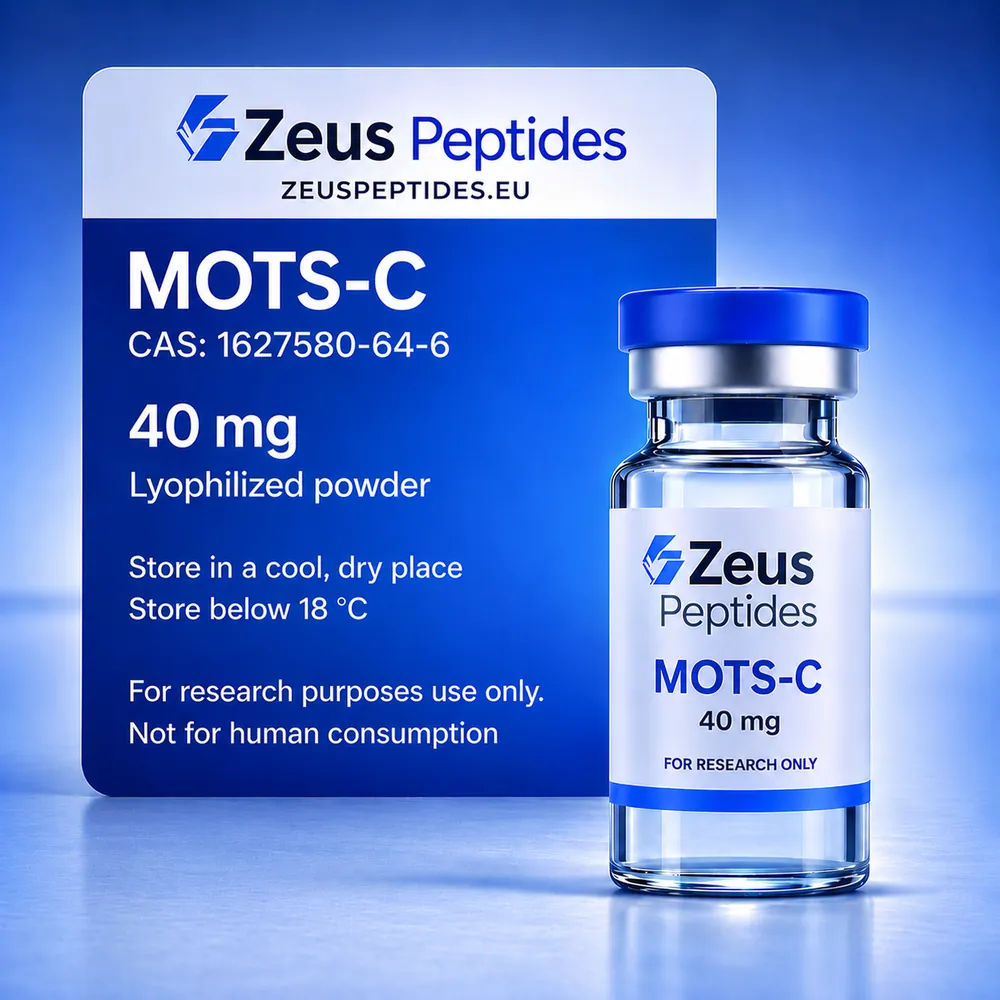
MOTS-c is a relatively recently discovered peptide that occupies a unique place within molecular biology: it is encoded by mitochondrial DNA rather than the nuclear DNA that gives rise to most other studied peptides. This origin makes MOTS-c a widely discussed subject of study within research on mitochondrial biology and cellular metabolism. This article discusses what is known about this peptide in the scientific literature.
What is MOTS-c?
MOTS-c (Mitochondrial Open Reading Frame of the 12S rRNA type-c) is a small peptide that scientists have identified as the product of a reading frame within the mitochondrial genome that was, until recently, unknown. Unlike most peptides encoded by nuclear DNA, MOTS-c is therefore produced directly by the mitochondrion itself — a discovery that is relatively new within molecular biology and has drawn considerable attention from researchers.
This mitochondrial origin places MOTS-c within a broader category referred to in the literature as "mitochondrial-derived peptides" (MDPs), a class of molecules that has only been systematically mapped in recent years.
Why mitochondrial origin matters for research
Mitochondria have traditionally been viewed as the "powerhouses" of the cell, responsible for producing ATP through oxidative phosphorylation. The discovery that mitochondria can also encode functional peptides that appear to send signals beyond the mitochondrion itself has given rise to a new research field: mitochondrial communication with the rest of the cell and the organism.
Scientists therefore study MOTS-c primarily within the context of this broader question: how do mitochondria communicate with nuclear DNA and with other tissues, and what role do mitochondrially encoded peptides play in this process?
Research areas around MOTS-c
Cellular metabolism in vitro
A significant portion of the published studies on MOTS-c concerns in-vitro cell culture research into metabolic signaling pathways, including pathways involved in glucose metabolism at the cellular level. Researchers study how MOTS-c interacts with intracellular signaling proteins.
Research on cellular aging (senescence)
MOTS-c is also studied within research on cellular aging and senescence-related processes in cell culture models. This research area is fundamental in nature and focuses on understanding molecular mechanisms at the cellular level, not on applications in humans.
Preclinical research in animal models
Besides in-vitro work, MOTS-c appears in preclinical studies in rodents, where researchers track metabolic parameters at the system level within strictly regulated, ethically reviewed research designs.
How scientists study MOTS-c
- In-vitro cell culture models: research into intracellular signal transduction and metabolic pathways at the molecular level.
- In-vivo animal models: preclinical studies in laboratory animals tracking system-wide metabolic parameters at recognized research institutions.
- Genomic and bioinformatics research: analyses of the mitochondrial genome aimed at identifying additional, as-yet-undiscovered mitochondrially encoded peptides — a research line from which MOTS-c itself originated.
Limitations of the current body of research
Compared with longer-studied peptides, MOTS-c is a relatively young subject of research. Scientists publishing in this field regularly point to the following limitations:
- The research field into mitochondrially encoded peptides in general is still in an early stage, with a limited number of independent replication studies.
- Many findings come from in-vitro models or small-scale animal models, which limits the generalizability of the results.
- The precise molecular mechanisms by which MOTS-c signals intracellularly and intercellularly have not yet been fully elucidated and remain an active subject of ongoing research.
These limitations reflect the usual, gradual buildup of scientific knowledge in a relatively newly discovered research domain.
Frequently asked questions
Why is MOTS-c called a "mitochondrial peptide"?
Because, unlike most other studied peptides, it is encoded by mitochondrial DNA rather than nuclear DNA — a distinguishing feature that explains the scientific interest in it.
Is MOTS-c the same as other well-known research peptides?
No, MOTS-c belongs to a separate class, the mitochondrial-derived peptides, and differs structurally and in origin from, for example, growth hormone secretagogues or tissue-repair peptides discussed elsewhere on our site.
Is there marketing authorization for MOTS-c as a medicine or supplement?
No. MOTS-c has no marketing authorization in the EU as a medicine, cosmetic product, or food supplement. ZeusPeptides offers it exclusively as a research chemical for qualified laboratories.
Sources/References
- Publications on mitochondrial-derived peptides (MDPs) in molecular biology journals.
- Research on mitochondrial genomics and non-canonical reading frames within mitochondrial DNA.
Interested in MOTS-c for your laboratory research? View MOTS-c in our range at ZeusPeptides.