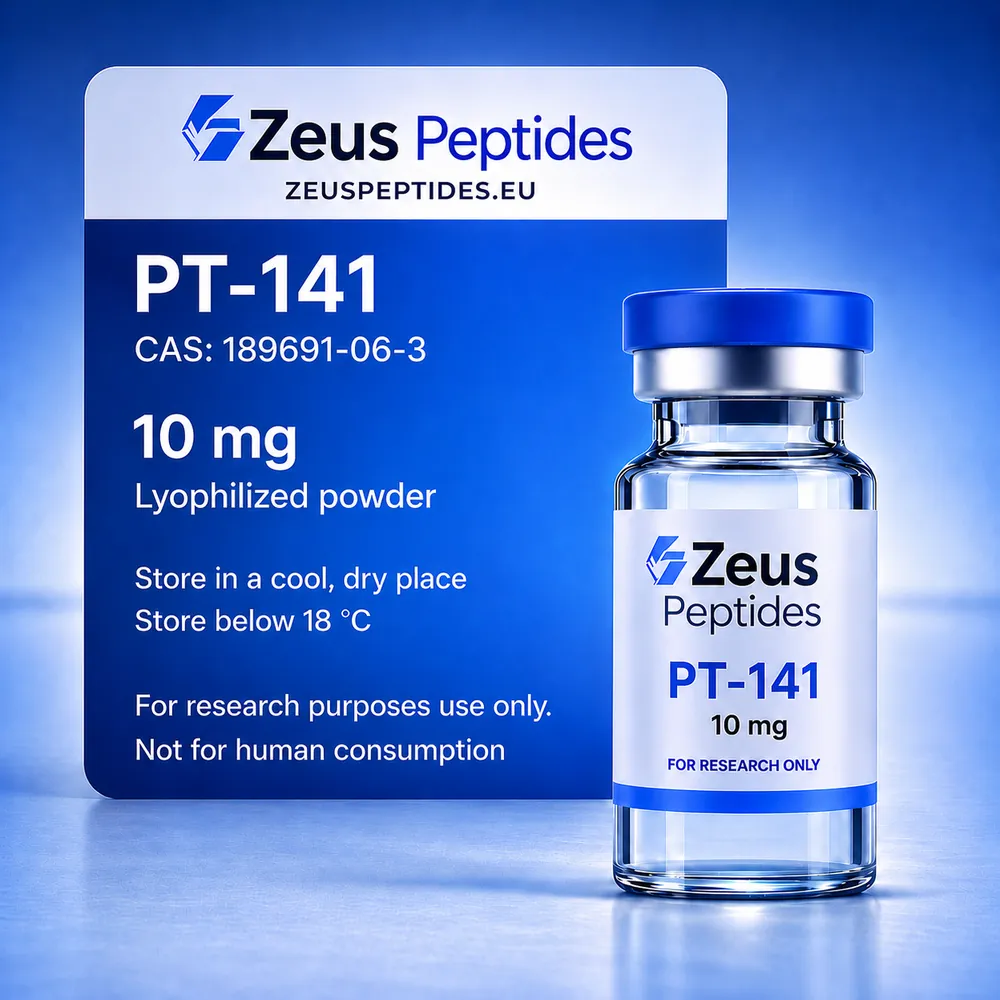
PT-141, also referred to as Bremelanotide in the scientific literature, is a synthetic peptide that comes up regularly in publications on melanocortin receptors. The name surfaces across a wide range of searches, from forums to specialist journals. This article lays out what PT-141 actually is, where it originates from, and which research fields scientists use to study this molecule — based exclusively on published literature, without any claims about effects in humans.
What is PT-141 (Bremelanotide)?
PT-141 is a synthetic, cyclic heptapeptide derived from melanotan II, itself an analog of the naturally occurring hormone alpha-MSH (alpha-melanocyte-stimulating hormone). Researchers developed PT-141 in the context of structure-activity research on melanocortin receptors, aiming to produce more selective molecules than the broader melanotan analogs.
In the literature, PT-141 is described as a molecule that acts on specific subtypes within the melanocortin receptor family. This receptor family is naturally involved in a wide range of physiological signaling pathways and has been a subject of study in receptor pharmacology for decades.
Origin and structural relationship to melanotan analogs
PT-141 was originally described in academic research focused on optimizing melanocortin agonists. Whereas broader analogs such as melanotan II act on multiple receptor subtypes simultaneously, comparative publications describe PT-141 as having a different, more specific receptor profile. This structural refinement makes it a relevant subject of study for researchers interested in the relationship between peptide structure and receptor selectivity.
Research areas within melanocortin receptor pharmacology
In the published scientific literature, PT-141 is mainly studied within the following domains:
Receptor binding studies
A substantial portion of the published research on PT-141 concerns in-vitro receptor binding studies, in which scientists examine, using cell culture models, how the molecule interacts with different melanocortin receptor subtypes. This type of research yields fundamental insights into receptor affinity and selectivity.
Neuropharmacological research in animal models
PT-141 also appears in preclinical research in rodents, where researchers study signaling pathways in the central nervous system linked to melanocortin receptors. Such studies take place within strictly regulated, ethically reviewed research designs and are aimed at better understanding underlying neurobiological mechanisms — not at establishing effects in humans.
Structure-activity research
Because PT-141 is derived from a broader class of melanocortin analogs, it is also used as a reference molecule in structure-activity research, where scientists systematically compare variations in peptide sequences to understand which structural elements contribute to receptor binding.
How scientists study PT-141
As with many other research peptides, investigation of PT-141 follows two main tracks:
- In-vitro models: cell culture experiments in which receptor binding and signal transduction are measured under controlled laboratory conditions.
- In-vivo animal models: studies in rodents conducted at recognized research institutions, tracking physiological responses at the tissue and system level according to established ethical protocols.
Publications in this field typically emphasize that findings from animal models cannot simply be extrapolated to humans, and that further, independently replicated studies are needed before broader scientific conclusions are warranted.
Limitations of the current body of research
As is common with many relatively specialized research peptides, the literature on PT-141 has a number of methodological limitations that scientists themselves regularly point out:
- Many studies are small in scale and limited to specific animal models, which constrains the generalizability of the findings.
- Differences in experimental design between research groups (for example in measurement methods or administration protocols within the study design) make direct comparison between studies difficult.
- Independent replication of findings by multiple laboratories remains limited in the published literature.
These limitations are inherent to a relatively young research field and reflect the usual trajectory of scientific knowledge-building: from early exploratory studies toward broader consensus.
Frequently asked questions
Is PT-141 the same molecule as Bremelanotide?
Yes, PT-141 and Bremelanotide are names used interchangeably in the literature for the same synthetic peptide.
Does PT-141 have marketing authorization as a medicine in the EU?
ZeusPeptides offers PT-141 exclusively as a research chemical for qualified laboratories. It is not intended, tested, or approved for use in humans or animals outside a recognized research setting.
What is the difference between PT-141 and melanotan II?
Both are melanocortin analogs, but the literature describes PT-141 as structurally derived from melanotan II with a different receptor selectivity profile. The precise pharmacological differences remain under investigation.
Sources/References
- Published receptor pharmacology studies on melanocortin receptor subtypes.
- Structure-activity research on melanocortin analogs in the peptide chemistry literature.
Interested in PT-141 for your laboratory research? View PT-141 in our range at ZeusPeptides.